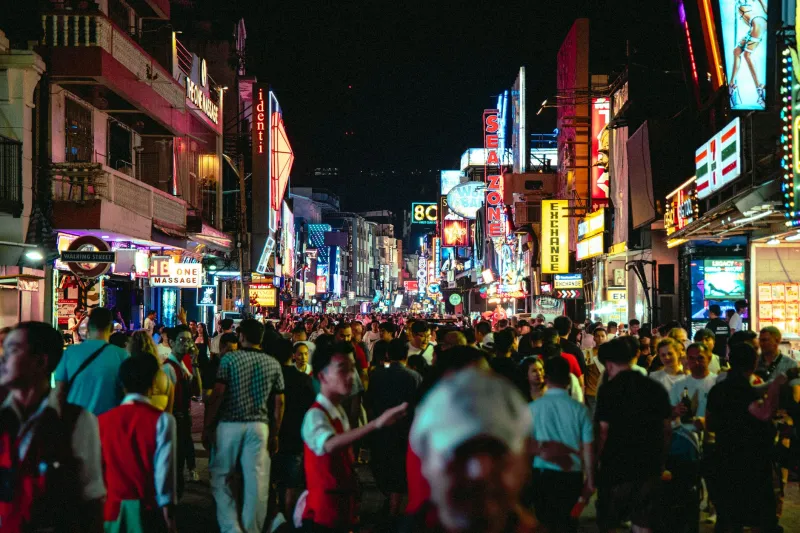
From Visitor to Local: The Quiet Identity Shift That Sneaks Up on Pattaya Expats

There's no ceremony, no stamp in your passport, no moment where someone hands you a certificate. But somewhere between your third lease renewal and the day you start giving other tourists directions, Pattaya stops being a place you're visiting and starts being the place you actually live. For Americans, that transition is more complicated — and more fascinating — than most people expect.
It doesn't announce itself. One week you're a guy from Ohio who's been here "a while." The next, you're mildly irritated when a newcomer mispronounces Sukhumvit. That's when you know something has fundamentally shifted.
The Moment the City Stops Feeling Foreign
Most Americans who end up staying in Pattaya long-term will tell you they didn't plan it that way. They came for a few months, maybe to test the remote work lifestyle or decompress after a rough chapter back home. The city was supposed to be a pitstop.
But Pattaya has this particular gravity. The cost of living makes it easy to stay. The weather removes one of life's most persistent complaints. And the social scene — chaotic, layered, occasionally absurd — turns out to be oddly compelling once you stop treating it like a spectacle and start participating in it.
The psychological shift happens in stages. First, you stop comparing everything to home. You quit saying "back in the States, they do this differently" every time something surprises you. Then you start developing preferences — a specific noodle stall, a particular back road that avoids the afternoon traffic, a tailor who actually gets your measurements right. These aren't tourist preferences. They're resident ones. And the difference matters more than it sounds.
The American Identity Tug-of-War
Here's where it gets genuinely complicated. Most Americans carry a strong sense of national identity — it's baked in from childhood, reinforced by everything from Fourth of July cookouts to the way US passports get treated at borders worldwide. When you've been in Pattaya long enough to feel at home there, that identity doesn't disappear. It just gets... negotiated.
Some expats lean hard into being American abroad. They seek out other Americans, gravitate toward Western bars, celebrate Thanksgiving with the kind of dedication they never bothered with back in Phoenix. There's nothing wrong with that — it's a legitimate way to stay anchored. But it can also become a form of avoidance, a way of living in Pattaya without ever really letting Pattaya in.
Others swing the other direction. They start learning Thai, adopt local customs enthusiastically, and quietly start to feel embarrassed by the loud, sunburned tourists on Beach Road who remind them of who they used to be. This overcorrection has its own pitfalls — you can end up belonging fully to neither world, which is its own kind of loneliness.
The expats who seem to navigate it best are the ones who hold both identities without forcing them to compete. They're Americans who live in Thailand. Not Americans pretending to be Thai, and not Americans who happen to be physically located in Thailand while mentally still in the US.
The Guilt Nobody Talks About
There's an emotional undercurrent in the long-term expat experience that doesn't get much airtime: guilt. Not the dramatic, crisis-level kind — more like a low hum that surfaces around the holidays, or when a parent gets sick, or when a friend back home goes through something hard and you're twelve time zones away.
American culture doesn't have a great framework for the person who leaves. We celebrate stories of people who move to New York or LA to chase a dream, but the person who moves to Southeast Asia and stays is a trickier figure. Are you brave or are you running? Are you living freely or are you avoiding responsibility? Family members will ask, sometimes bluntly. And the honest answer — that it's probably a little of both, and that's okay — isn't always easy to articulate over a Zoom call on Christmas morning.
Long-term expats in Pattaya talk about developing a different relationship with distance. You stop feeling like you should be at every family gathering and start being more intentional about the ones that genuinely matter. You plan bigger visits home instead of guilt-tripping yourself over every birthday you miss. It's a recalibration, and it takes time to feel okay about it.
How the City Changes Your Decisions
Once Pattaya becomes home rather than destination, it starts influencing decisions in ways that would have seemed strange to your pre-expat self.
Career choices shift. Remote workers who once treated the city as a backdrop start building things in Pattaya — small businesses, freelance networks, community projects. The question stops being "how long can I make this work?" and becomes "what do I actually want to build here?"
Relationships change shape too. Friendships with other long-term expats develop a particular depth — you've watched each other navigate visa runs, health scares, relationship ups and downs, and the occasional financial rough patch. These aren't the friendships of convenience that form in tourist-heavy social scenes. They're the real thing.
And for Americans in relationships with Thai partners, the belonging shift takes on another dimension entirely. You're not just navigating your own cultural identity anymore — you're building a shared life that bridges two very different worlds, with all the complexity and richness that implies.
What "Belonging" Actually Looks Like Here
Belonging in Pattaya as a foreigner is different from belonging in your hometown. You'll never be Thai. The language barrier, even if you chip away at it, will always be there to some degree. You'll always be a farang in certain contexts, and pretending otherwise is a form of delusion that Pattaya will correct pretty quickly.
But belonging doesn't require erasure of difference. It requires investment. It means knowing your neighbors' names, tipping the people who make your daily life work, learning enough Thai to show basic respect, and caring about the community you're part of — not just extracting from it.
The Americans who find genuine belonging in Pattaya are the ones who stopped auditing the experience and started living it. They've made peace with the fact that home is now a complicated word with more than one answer. And most of them, if you ask them honestly, wouldn't trade that complexity for anything.
The city didn't change who they are. It just gave them more room to figure it out.